
Roulette Strategies and Betting Systems: Professional Guide to Mathematical Betting Methods
Roulette strategies have captivated casino enthusiasts and professional gamblers for centuries, offering systematic approaches to one of gaming’s most iconic wheel games. While the house edge remains mathematically constant, understanding various betting systems, progressive betting methods, and money management techniques can help players maximize their gaming experience and maintain disciplined gambling practices. This comprehensive guide examines proven roulette betting strategies, mathematical systems, and bankroll management approaches used in both online casinos and land-based casino environments.
The appeal of strategic gambling lies in applying structured betting patterns rather than random wagering, enabling players to approach table games with calculated risk and defined objectives. From conservative betting approaches to aggressive betting tactics, each system offers distinct advantages for different player profiles, bankroll sizes, and session strategies. Understanding probability theory, statistical analysis, and the mathematical foundations underlying these gaming strategies provides essential knowledge for anyone seeking to optimize their roulette betting approach while acknowledging the inherent casino advantage present in all legitimate gaming establishments.
Understanding European Roulette, American Roulette, and French Roulette Variants

The foundation of effective roulette strategies begins with recognizing the fundamental differences between major game variants, as these variations directly impact house edge calculations and optimal betting approaches. European roulette features 37 pockets including a single zero pocket, delivering a house edge of 2.70% across most wagers. American roulette introduces an additional double zero pocket, increasing the total to 38 pockets and raising the casino advantage to 5.26%, significantly affecting long-term expected value calculations. French roulette matches the European wheel layout while incorporating player-favorable rules that further reduce the house edge under specific circumstances.
French roulette distinguishes itself through the En prison rule and La Partage rule, which apply specifically to even-money outside bets when the ball lands on zero. The La Partage rule returns half the stake on even-money bets when zero appears, effectively reducing the house edge to 1.35% on these wagers. The En prison rule allows players to recover their entire stake if their imprisoned bet wins on the subsequent spin, offering similar mathematical advantages. These rule variations make French roulette mathematically superior for strategies emphasizing Red/Black betting, Even/Odd betting, and High/Low betting, where the reduced casino advantage compounds favorably over extended gaming sessions.
How Does Wheel Layout Impact Strategic Betting?
The pocket arrangement on roulette wheels follows carefully designed patterns that distribute numbers to ensure randomness and prevent exploitable wheel sections. European and French roulette wheels alternate high and low numbers, red and black colors, and even and odd values in non-sequential arrangements specifically engineered to eliminate predictable patterns. This intentional randomization directly impacts advanced techniques like wheel tracking, visual ballistics, and dealer signature analysis, which attempt to identify physical irregularities in spinning wheel mechanics or croupier behaviors that might create exploitable advantages.
The racetrack layout used for call bets and announced bets reflects the physical wheel arrangement, enabling players to execute neighbor bets and specialized wagers like Voisins du Zero, Tiers du Cylindre, and Orphelins. These sector betting approaches cover specific wheel sections rather than table layout groupings, representing a fundamentally different strategic wagering philosophy. Understanding the relationship between the physical wheel layout and betting combinations becomes essential for players exploring advanced betting strategies beyond standard inside bets and outside bets available on the traditional table layout.
Martingale System and Negative Progression Betting Strategies
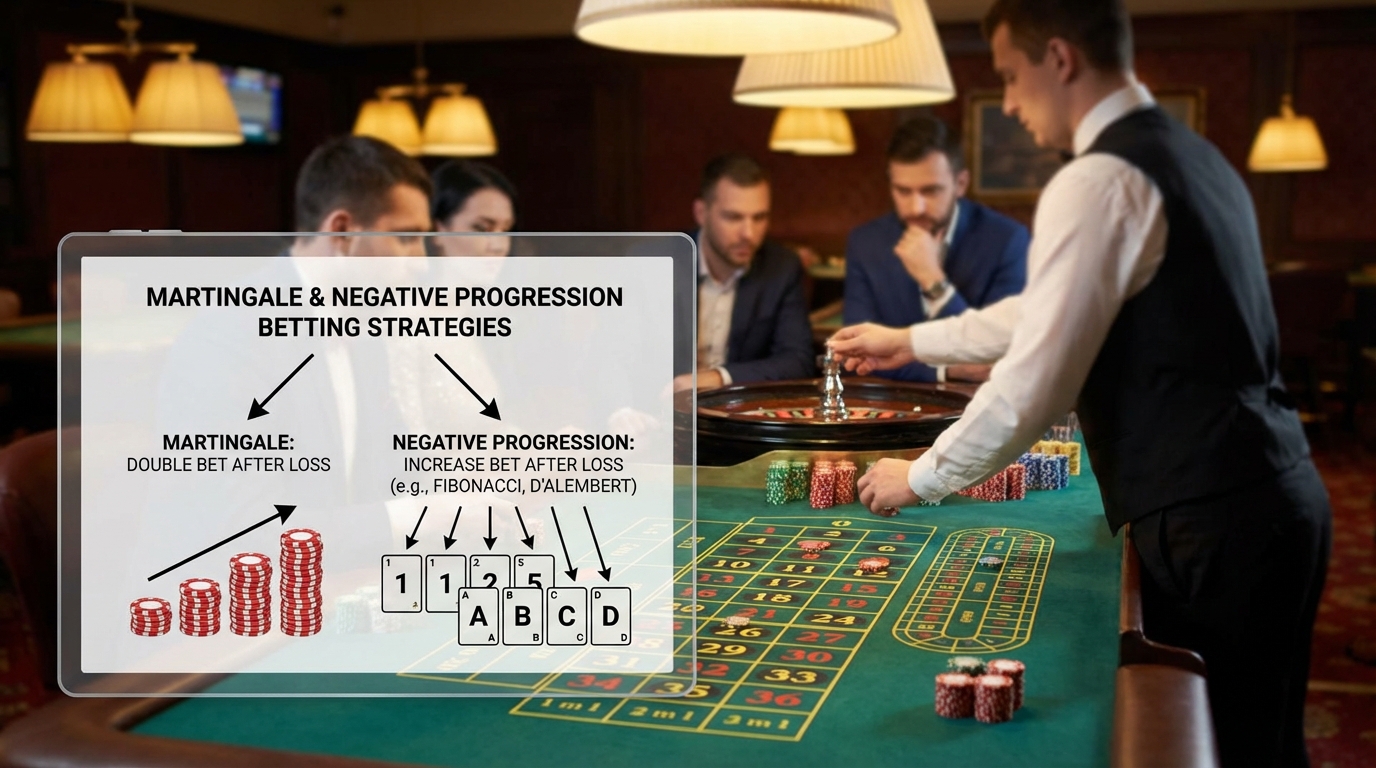
The Martingale system represents the most widely recognized negative progression betting approach, requiring players to double their betting unit following each loss while returning to the base stake after wins. This mathematical betting method theoretically guarantees profit recovery from previous losses plus one unit of gain when a winning spin eventually occurs. The strategy applies most effectively to even-money wagers including Red/Black betting, Even/Odd betting, and High/Low betting, where payout ratios of 1:1 simplify progression calculations and the relatively high winning odds of approximately 48.6% (European roulette) or 47.4% (American roulette) provide frequent wins.
Despite its theoretical appeal, the Martingale system encounters significant practical limitations that constrain its real-world effectiveness. Consecutive losing streaks rapidly escalate betting unit requirements, quickly reaching table limits or depleting gambling bankroll reserves before recovery occurs. A player beginning with a $5 base stake faces a $640 requirement after just seven consecutive losses, illustrating how seemingly improbable losing sequences create unsustainable bet sizing demands. Professional risk management acknowledges these constraints, emphasizing that no betting progression can overcome the fundamental house edge embedded in the game’s mathematical structure, though negative progression systems can produce short-term profits during favorable variance periods.
What Are the Practical Risks of Martingale Betting?
The primary vulnerability of Martingale-based betting systems manifests when consecutive losses coincide with insufficient bankroll depth or restrictive betting limits. Table limits exist specifically to prevent unlimited progression betting, capping maximum wagers at levels typically 100-500 times the minimum bet. A player utilizing a $10 minimum bet at a table with a $500 maximum limit can only sustain five consecutive doublings before reaching the ceiling, at which point loss recovery becomes impossible and the accumulated deficit cannot be recouped through the system’s mechanics.
The gambler’s fallacy frequently compounds Martingale risks, as players mistakenly believe that extended losing streaks decrease the probability of additional losses. Each roulette spin represents an independent event with unchanged probability regardless of previous outcomes, meaning a seventh consecutive red result carries identical 48.6% probability as the first. This statistical reality contradicts intuitive expectations that “due” outcomes must materialize, leading players to exhaust bankrolls pursuing recovery in situations where probability theory offers no mathematical justification for expected variance normalization within constrained timeframes or betting limit parameters.
Fibonacci Sequence and D’Alembert Strategy in Mathematical Systems
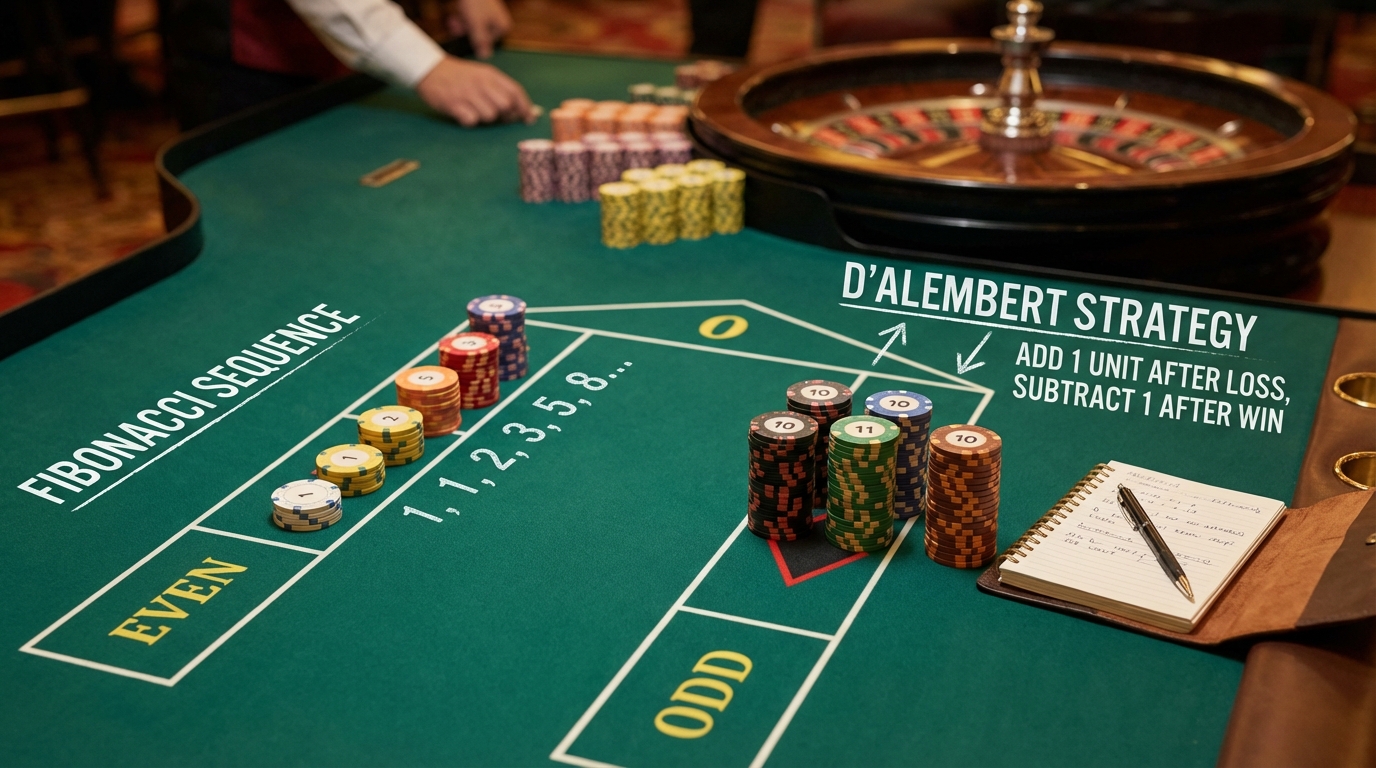
The Fibonacci sequence provides the mathematical foundation for a gentler negative progression system that increases stakes more conservatively than the aggressive doubling required by Martingale betting. This sequential betting approach follows the famous mathematical pattern where each number equals the sum of the two preceding values (1, 1, 2, 3, 5, 8, 13, 21, 34, 55), advancing one position in the sequence after losses and retreating two positions following wins. The slower progression rate extends bankroll longevity while still pursuing loss recovery, making this systematic wagering approach more sustainable for players with moderate session bankroll allocations.
The D’Alembert strategy employs an even more conservative negative progression, increasing bets by a single unit after losses and decreasing by one unit following wins. Named after the French mathematician Jean le Rond d’Alembert, this balanced approach assumes that wins and losses will eventually equilibrate, creating profit through the asymmetric relationship between increased stakes during losing periods and reduced stakes during winning sequences. While this equilibrium assumption lacks rigorous probability systems support—each spin remains independent with constant odds—the D’Alembert strategy’s modest progression limits catastrophic bankroll depletion risks while maintaining structured betting discipline that prevents erratic wagering behaviors.
How Do These Progressive Systems Compare Mathematically?
Comparing negative progression betting methods reveals distinct risk-reward profiles suited to different player objectives and risk tolerance levels. The Martingale system offers the highest short-term win probability with catastrophic risk potential, the Fibonacci approach provides moderate progression with extended play duration, and the D’Alembert strategy delivers the most conservative betting progression with correspondingly modest profit potential. Statistical betting analysis demonstrates that all three systems face identical long-term expected value determined by the house edge, with differences appearing exclusively in variance patterns and session outcome distributions.
Players should select progressive betting systems based on their session strategy preferences and bankroll protection priorities rather than profitability expectations. Aggressive betting tactics using Martingale progressions suit short gambling sessions where players seek quick profit targets or can accept complete session loss risk. Conservative betting approaches utilizing Fibonacci or D’Alembert systems accommodate longer gaming sessions with entertainment value prioritized over maximum profit strategies, providing structured betting frameworks that enhance game planning without creating unsustainable financial exposure during inevitable negative variance periods that characterize all probability betting endeavors.
Labouchere System and Paroli System Betting Progressions
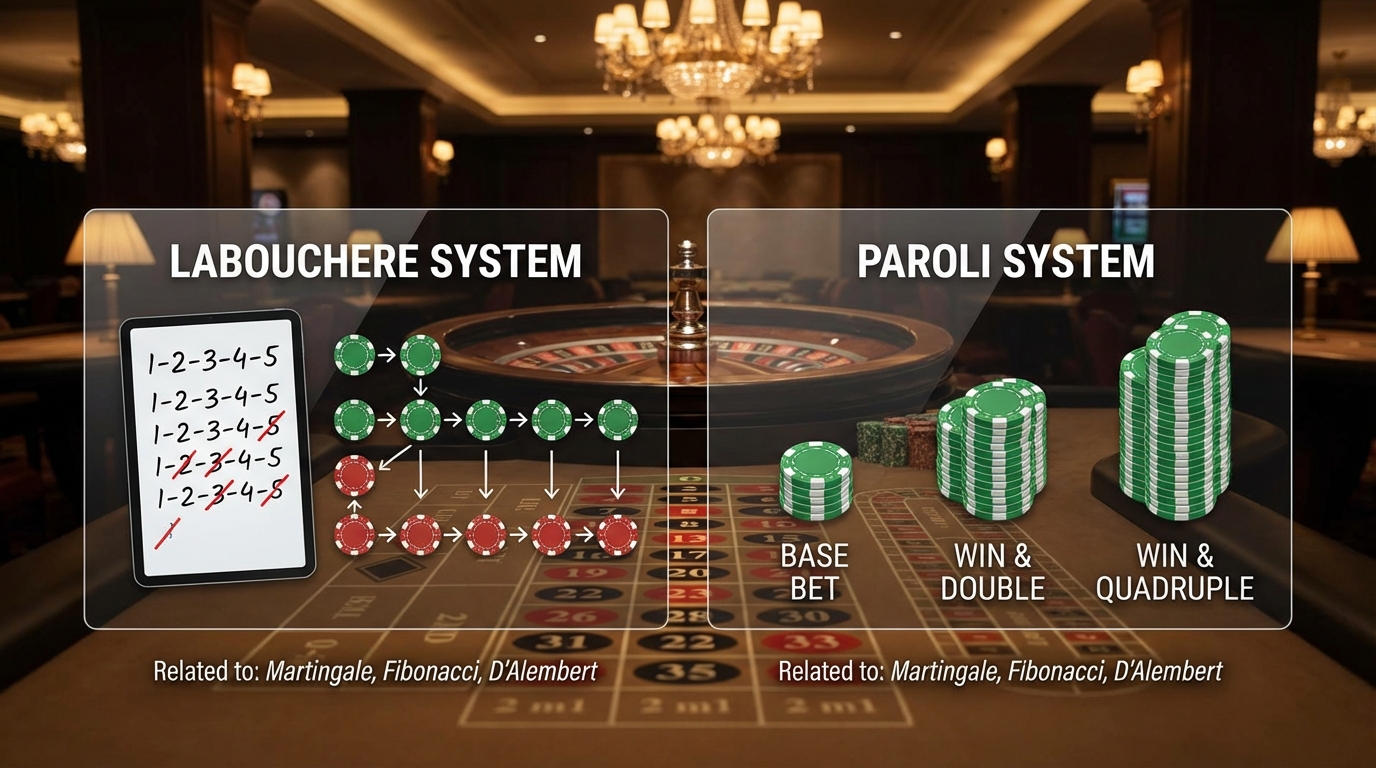
The Labouchere system introduces complexity through cancellation sequences where players create a numerical series representing desired profit targets, then wager amounts equal to the sum of the sequence’s end values. Winning bets eliminate the sequence’s outer numbers while losing wagers add the lost stake to the sequence’s right end, continuing until all numbers are cancelled and the predetermined profit target is achieved. This flexible mathematical system allows customized bet sizing and profit objectives, with sequence construction determining the overall risk profile. Conservative sequences with smaller number ranges minimize exposure while ambitious sequences accelerate both potential profits and associated risks during unfavorable variance periods.
The Paroli system represents a positive progression approach where players increase stakes following wins rather than losses, capping progression at predetermined levels before returning to base betting units. Commonly implemented as a “let it ride” strategy over three consecutive wins, this offensive tactics system seeks to maximize returns during favorable streaks while limiting losses to single base units during the more frequent losing spins. The positive progression structure aligns with defensive strategy principles by risking only accumulated profits during advancement sequences, protecting the core gambling bankroll from the escalating exposure that characterizes negative progression systems like Martingale betting.
Which System Offers Better Bankroll Protection?
Positive progression systems like the Paroli method provide superior bankroll protection compared to negative progression approaches, as they risk house money during stake increases rather than compounding player funds during losing sequences. This fundamental structural difference means that extended unfavorable variance depletes bankrolls at only the base betting unit rate, dramatically reducing ruin probability compared to negative progression systems where consecutive losses create exponentially increasing stake requirements. The mathematical betting advantage manifests in session sustainability, allowing players to withstand longer losing periods without exhausting gambling bankroll reserves or encountering table limits constraints.
The Labouchere system occupies a middle position regarding risk management, with player-defined sequences determining overall exposure levels. Short sequences with small numbers create relatively conservative betting patterns approaching flat betting characteristics, while extended sequences with large values generate stake requirements comparable to aggressive Martingale progression during unfavorable runs. This customization capability enables players to calibrate risk strategies matching their specific financial parameters and gaming objectives, though the fundamental house edge remains unchanged regardless of sequence construction. Professional money management emphasizes that system selection should reflect loss limit tolerances and session duration objectives rather than profitability expectations unsupported by probability theory.
James Bond Strategy and Coverage Betting Methods
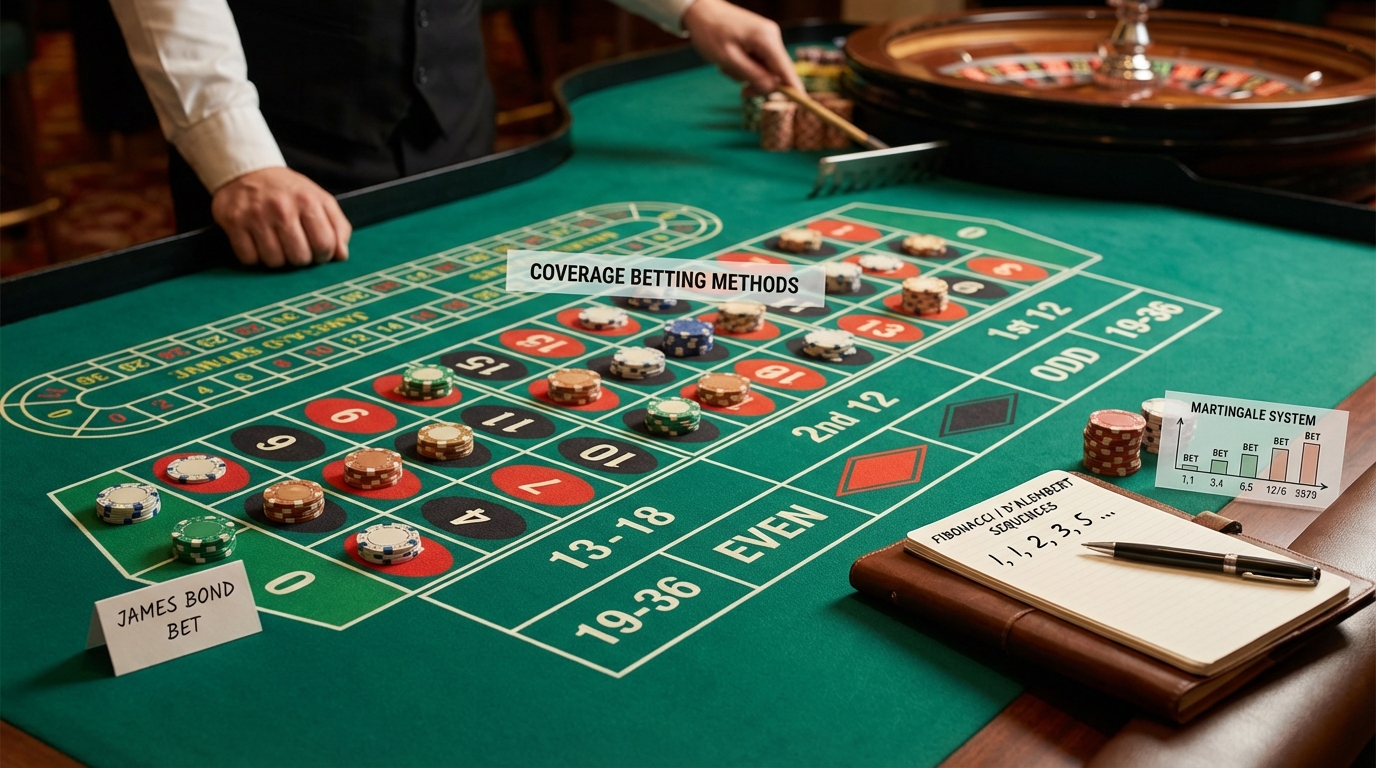
The James Bond strategy employs a static combination betting approach that covers approximately 67.6% of the European roulette layout through a specific chip placement distribution. The classic implementation requires 20 units distributed as: 14 units on high numbers (19-36), 5 units on the line bet covering 13-18, and 1 unit on zero as insurance betting. This coverage betting pattern generates 8-unit profit when high numbers appear (most frequent), 5-unit profit for the six-number line bet, and 16-unit profit on the zero insurance, with losses occurring only when numbers 1-12 appear, representing approximately 32.4% of spins.
This bet distribution strategy exemplifies multiple bets combination betting designed to create frequent small wins while accepting occasional larger losses, appealing to players preferring action-oriented gaming sessions with regular return events. The James Bond strategy requires no progression calculations or complex sequence tracking, making it accessible for beginning strategies while providing the psychological satisfaction of winning approximately two-thirds of spins. However, the mathematical reality remains that the house edge applies uniformly across all betting combinations, meaning the 32.4% losing frequency generates sufficient deficit to overcome the 67.6% winning frequency when accounting for the payout ratios and stake distribution requirements.
How Does Coverage Betting Affect Win Frequency?
Coverage betting substantially increases win frequency at the expense of reduced profitability per winning spin, creating a trade-off between entertainment value and profit maximization. Spreading chip placement across multiple numbers or number groups generates more frequent payouts, providing the psychological reinforcement that many recreational players value during casino sessions. The James Bond strategy exemplifies this approach, delivering wins on two out of every three spins theoretically, though the payout amounts barely exceed the 20-unit total stake requirement, creating modest positive returns during winning spins that are offset by the 20-unit complete loss when numbers 1-12 appear.
Alternative spread betting configurations include dozen betting combinations covering two of three dozens simultaneously, column betting patterns spanning multiple columns, or hedge strategies incorporating complementary inside bets and outside bets to minimize loss magnitude. All coverage bets share the characteristic of reducing variance through diversified exposure while maintaining unchanged expected value determined by the house edge. Statistical analysis confirms that no combination bets configuration alters the fundamental probability systems governing roulette outcomes, though coverage betting approaches may suit players prioritizing session duration and entertainment value over maximum profit strategies or quick-win objectives characteristic of concentrated straight up bet tactics.
Inside Bets, Outside Bets, and Optimal Bet Selection
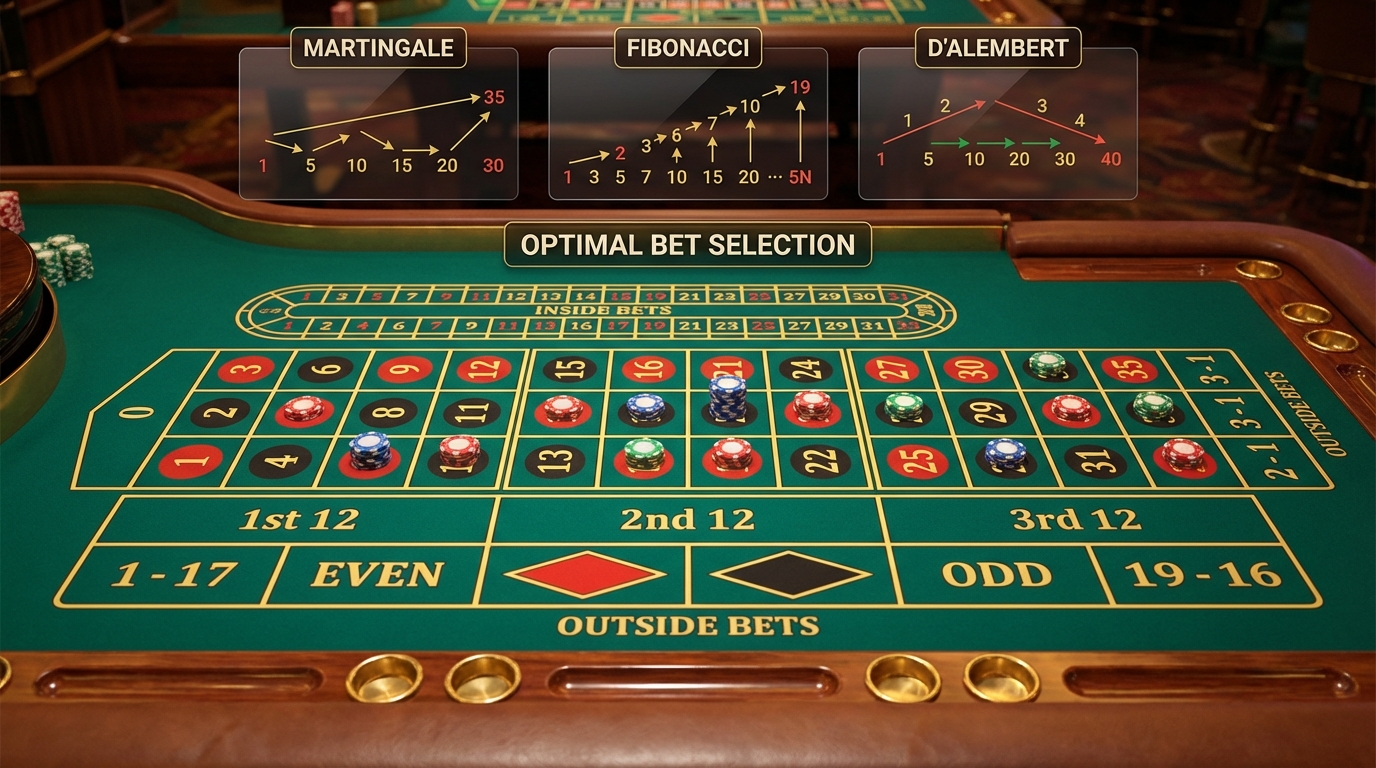
Inside bets encompass wagers placed directly on numbers or small number groups within the main table layout, including straight up bet (single number), split bet (two adjacent numbers), street bet (three-number row), corner bet (four-number intersection), and line bet (six numbers across two rows). These betting combinations offer higher payout ratios ranging from 5:1 for line bets to 35:1 for straight up bets, compensating for their lower winning odds. The basket bet covering 0, 1, 2, 3 (and 00 in American roulette) represents a unique inside bet with notably unfavorable payout ratios, delivering only 6:1 return in European roulette and creating a disproportionately high 7.89% house edge in American roulette variations.
Outside bets provide wagers on larger number groupings positioned outside the main number grid, including Red/Black betting, Even/Odd betting, High/Low betting (1-18 or 19-36), dozen betting (1-12, 13-24, 25-36), and column betting covering twelve numbers in vertical arrangements. These wagers offer lower payout ratios of 1:1 for even-money bets and 2:1 for dozens and columns, balanced by substantially higher winning odds approaching 48.6% for even-money propositions on European wheels. The strategic gambling question involves choosing between frequent smaller returns from outside bets versus occasional larger payouts from inside bets, with optimal betting depending on player objectives, session strategy, and individual risk preferences rather than mathematical superiority.
What Bet Types Offer the Best Odds?
In European and French roulette, all standard wagers carry identical 2.70% house edge with exception of the basket bet, making bet selection a matter of personal preference and strategic gambling style rather than mathematical advantage. The expected value calculation remains constant whether placing straight up bet wagers or even-money outside bets, as the payout ratios precisely compensate for the winning odds differential while maintaining the house edge. French roulette variants implementing the La Partage rule or En prison rule provide genuine mathematical advantages, reducing the casino advantage to 1.35% specifically for even-money bets, making Red/Black betting, Even/Odd betting, and High/Low betting objectively superior choices when these favorable rules apply.
American roulette introduces meaningful distinctions between bet types due to the double zero increasing overall house edge to 5.26% across standard wagers while the basket bet rises to 7.89%. Players operating in American roulette environments should strictly avoid basket bet placement, instead distributing stakes across any other betting combinations which maintain the standard 5.26% disadvantage. The strategic priority becomes selecting European or French roulette when available, as the single zero pocket configuration reduces the casino advantage by approximately half compared to American roulette, dramatically improving long-term expected value regardless of specific betting patterns or systematic wagering approaches employed during gaming sessions.
Call Bets, Announced Bets, and Advanced Racetrack Wagering
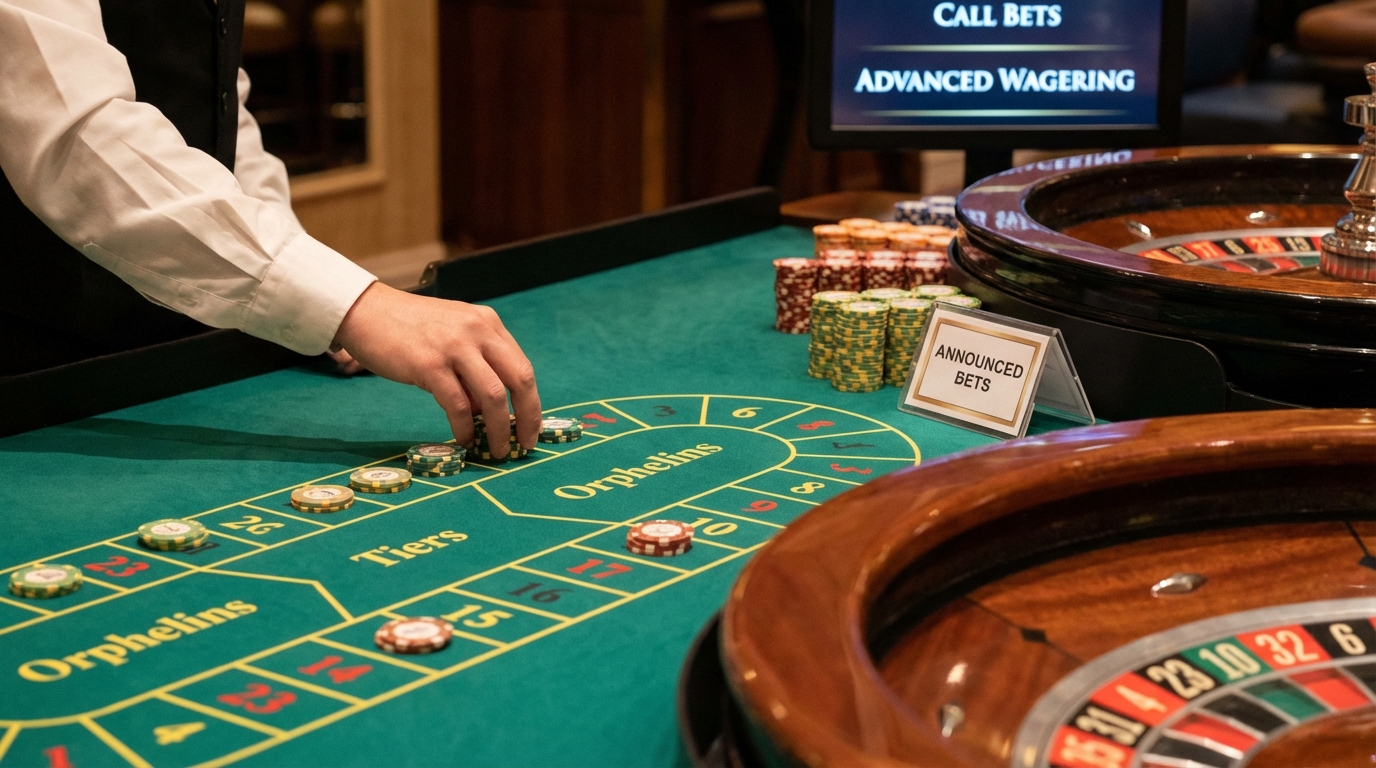
Call bets and announced bets represent specialized wagering options based on the physical wheel layout rather than table layout groupings, utilizing the racetrack layout oval that mirrors the actual pocket arrangement. These advanced betting strategies enable rapid placement of complex combination bets covering wheel sections through predetermined patterns. Voisins du Zero (“neighbors of zero”) covers 17 numbers surrounding the zero pocket using nine chips distributed across splits and corners. Tiers du Cylindre encompasses twelve numbers opposite zero using six chips, while Orphelins covers the remaining eight numbers not included in the other two major sections.
Neighbor bets extend the call bets concept by wagering on a specific number plus the two adjacent numbers on either side physically on the wheel, creating five-number coverage centered on the chosen value. This wheel sections betting approach suits players who believe in dealer signature patterns or wheel tracking possibilities, though legitimate random number generator systems in online roulette and properly maintained wheels in land-based casino environments eliminate exploitable physical biases. The strategic value of announced bets lies primarily in efficient chip placement for players preferring sector betting rather than any mathematical advantage, as the house edge applies uniformly regardless of whether wagers follow table layout or wheel layout groupings.
Are Call Bets Available in All Roulette Games?
Call bets availability varies significantly between gaming environments, with European land-based casino establishments traditionally offering comprehensive announced bets options while many American casinos restrict or prohibit call betting. The term “call bet” technically refers to verbal wagers placed without immediate chip placement, which many jurisdictions prohibit to prevent disputes. “Announced bets” accomplish identical wagering patterns but require simultaneous chip placement, making them legally permissible in broader regulatory environments. Online casino platforms with live dealer roulette frequently implement digital racetrack layouts enabling single-click placement of standard announced bets patterns, providing convenient access to these advanced techniques.
Players seeking to incorporate call bets and sector betting into their strategic gambling approach should verify availability and specific implementation rules at their chosen casino roulette venue. Some online roulette platforms offer racetrack betting interfaces exclusively on premium table games variants while restricting standard tables to conventional layout betting. Live roulette environments with professional croupier oversight typically accommodate announced bets requests more readily than automated RNG-based games where interface limitations may preclude these wagering options. Understanding available betting methods before developing game planning enables realistic session strategy formulation aligned with actual gaming conditions rather than theoretical approaches unsupported by the specific table limits, interface capabilities, and house rules governing the particular roulette games being played.
Biased Wheel, Wheel Tracking, and Physical Advantage Play
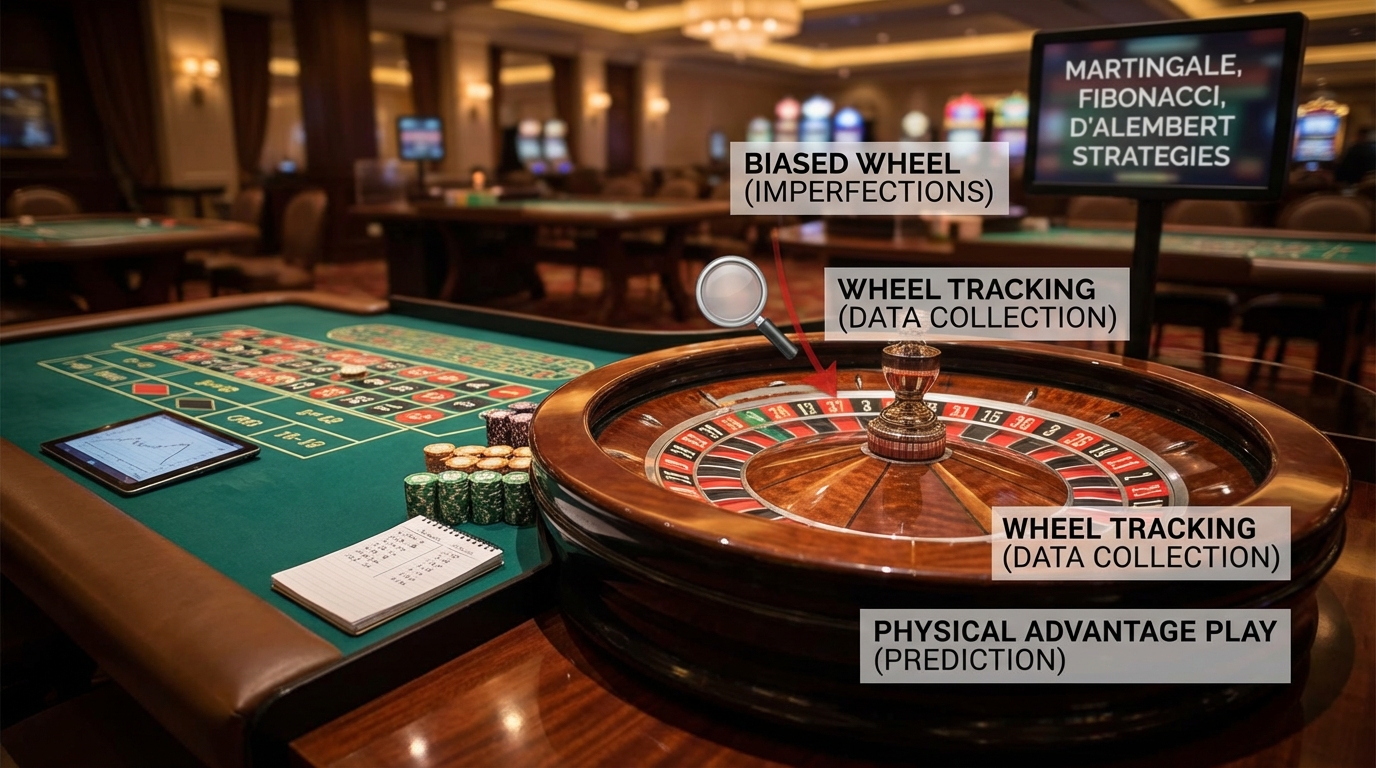
Biased wheel exploitation represents the rare circumstance where mathematical systems and statistical betting can theoretically overcome the house edge through identification of mechanical imperfections causing non-random pocket selection frequencies. Historical accounts detail successful bias detection where meticulous wheel tracking over thousands of spins revealed statistically significant deviations from expected probability distributions. These advantage play opportunities required extensive statistical analysis tracking every spin outcome, sophisticated number pattern analysis identifying clusters, and substantial time investment before exploitable biases emerged from normal variance fluctuations.
Modern casino operations have largely eliminated biased wheel opportunities through regular equipment maintenance, frequent wheel rotation between tables, and advanced monitoring systems detecting abnormal outcome distributions. Live dealer roulette platforms employ professional-grade equipment with rigorous maintenance protocols specifically designed to ensure Random Number Generator-equivalent randomness from mechanical wheels. The chaos theory governing actual ivory ball physics and spinning wheel dynamics introduces sufficient complexity that minuscule manufacturing variations no longer create exploitable advantages in properly maintained equipment. Contemporary advantage play focus has shifted toward visual ballistics techniques attempting to predict wheel sections during the spin rather than exploiting permanent mechanical biases.
Can Players Still Find Exploitable Wheel Biases?
The practical reality is that exploitable wheel biases have become exceptionally rare in regulated casino environments employing modern equipment and professional maintenance standards. Casino operators recognize that wheel integrity directly impacts profitability, motivating substantial investment in high-precision manufacturing, regular equipment inspection, and replacement schedules preventing bias development. The statistical sample sizes required to distinguish genuine bias from normal variance further compound exploitation difficulty—legitimate bias detection typically requires 5,000-10,000 spin observations before patterns achieve statistical significance, representing hundreds of hours of data collection before reaching actionable conclusions.
Visual ballistics and dealer signature techniques represent more plausible advantage play opportunities, though these require exceptional observational skills and operate within narrow parameters. Visual ballistics attempts to predict wheel sections during the final ball rotations before the croupier announces “no more bets,” relying on rapid mental calculations correlating ball speed, wheel velocity, and remaining rotation count. Dealer signature assumes certain croupiers develop consistent release patterns creating predictable outcomes, though professional dealers receive training specifically to randomize their spinning wheel techniques. Both approaches face significant obstacles including croupier vigilance against suspected advantage players, restrictive betting limits after spin initiation, and the fundamental challenge that even successful predictions generate only modest statistical advantages requiring substantial gambling bankroll resources to profitably exploit.
Reverse Martingale, Oscar’s Grind, and Positive Progression Systems
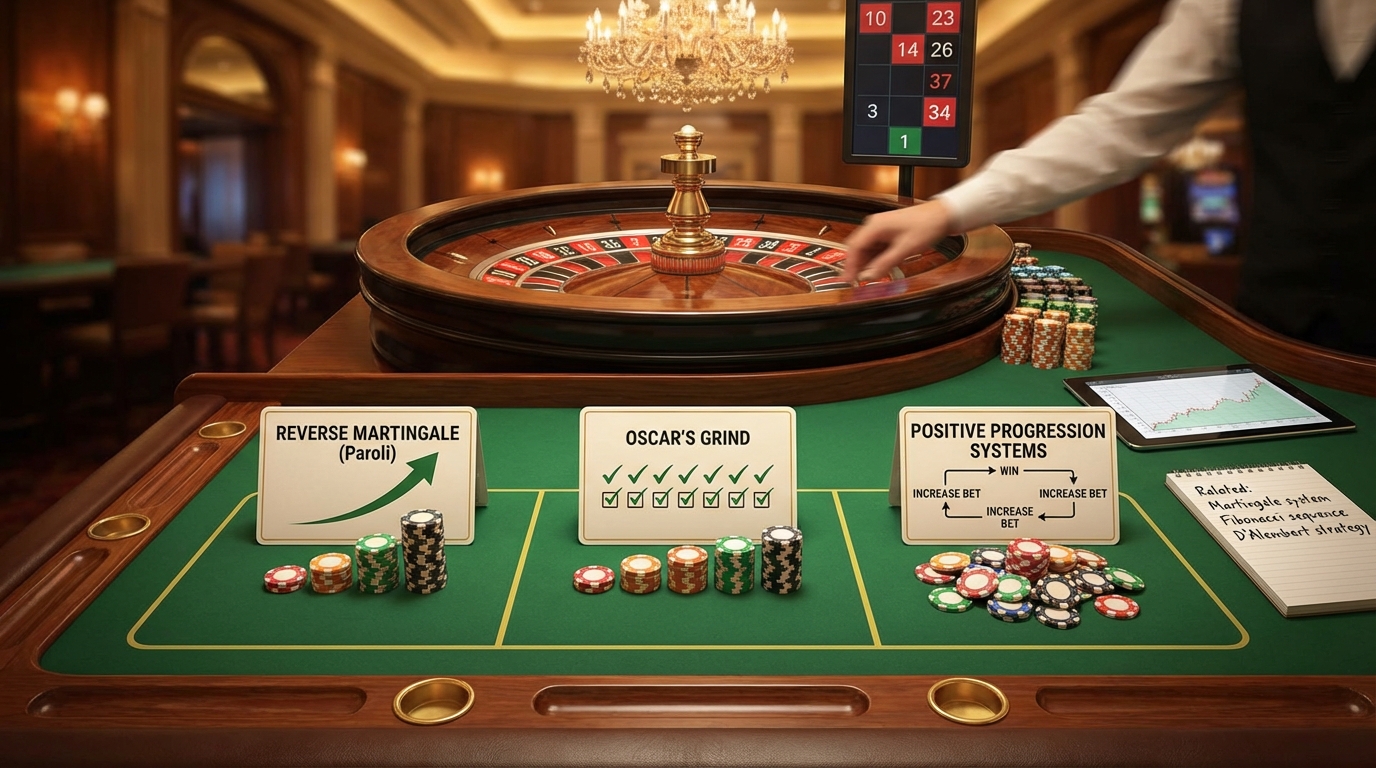
The Reverse Martingale, also called the Paroli system variation, doubles bets following wins rather than losses, seeking to maximize returns during winning streaks while minimizing losses during unfavorable variance. Players establish predetermined progression limits—typically three consecutive wins—before returning to base betting units regardless of outcome. This positive progression philosophy protects gambling bankroll by risking primarily accumulated profits during stake advancement, creating asymmetric exposure where maximum loss per sequence equals the initial base stake while successful progressions generate returns of seven times the base unit (after three consecutive doublings).
Oscar’s Grind implements a modified positive progression targeting consistent single-unit profits per cycle regardless of the path required to achieve this objective. Players increase stakes by one unit following wins but maintain current bet levels after losses, continuing each cycle until achieving exactly one unit of total profit before resetting to the base stake. This grinding methodology produces slow, steady returns during mixed win-loss sequences while protecting against catastrophic losses during extended unfavorable runs. The system’s mathematical betting structure emphasizes defensive strategy and profit preservation rather than maximum return objectives, appealing to disciplined gambling practitioners prioritizing session sustainability and controlled risk strategies over aggressive profit maximization tactics.
How Do Positive Progressions Manage Risk?
Positive progression betting fundamentally alters risk management dynamics by limiting maximum losses to single base units per betting sequence while allowing accumulated profits to fund stake increases. This structural approach protects the core gambling bankroll from the exponential exposure growth characterizing negative progression systems, where consecutive losses compound stake requirements potentially exhausting entire session bankroll allocations. During unfavorable variance periods—which probability theory confirms will occur regularly—positive progression players maintain base betting levels, depleting funds at the minimum possible rate while preserving capital for eventual favorable sequences.
The psychological dimension of positive progression systems provides additional advantages beyond pure mathematical considerations. Increasing stakes during winning sequences creates amplified returns while maintaining positive emotional states, whereas limiting exposure during losing periods prevents the desperation betting and chasing losses that destroy bankrolls during tilt episodes. This structured betting discipline helps maintain betting psychology equilibrium, keeping players within predetermined loss limit parameters and preventing the emotional decision-making that causes most significant gambling losses. While positive progression systems cannot overcome the fundamental house edge, they optimize bankroll protection and emotional control, creating more sustainable long-term gaming strategies for recreational and serious gambling practitioners alike.
Flat Betting, Session Bankroll, and Conservative Money Management

Flat betting represents the most straightforward and mathematically transparent betting approach, maintaining constant stake sizes throughout entire gaming sessions regardless of previous outcomes. This consistent wagering method eliminates progression complexity and the risk of catastrophic loss sequences that plague negative progression systems. Flat betting provides maximum predictability regarding potential session outcomes, with expected loss calculated simply as (total wagers × house edge), enabling precise bankroll protection planning and realistic win goal establishment based on probability theory rather than progression-dependent variance manipulation.
Session bankroll allocation forms the foundation of effective money management, requiring players to designate specific funds for defined gaming periods while maintaining absolute discipline against exceeding predetermined limits. Professional risk management typically recommends session bankroll representing 1-5% of total gambling bankroll, with individual bet sizing at 1-2% of session funds. This stake management framework enables players to withstand normal variance fluctuations without prematurely exhausting funds, providing adequate capital to experience statistically representative outcome distributions rather than making betting decisions based on small sample anomalies. Conservative betting approaches prioritizing entertainment value and extended play duration consistently outperform aggressive betting tactics in achieving positive overall gaming experiences.
What Percentage of Bankroll Should Each Bet Represent?
Optimal bet sizing depends on player objectives, risk tolerance, and session duration targets, though general money management principles provide useful guidelines. Conservative recreational players typically allocate 1-2% of session bankroll per wager, enabling approximately 50-100 bets before fund exhaustion, sufficient to experience representative probability distributions. This balanced approach accommodates normal negative variance while maintaining reasonable winning potential during favorable periods. More aggressive players may increase individual wagers to 3-5% of session funds, accepting higher volatility and shorter playing sessions in exchange for enhanced profit potential during winning sequences.
Professional advantage players and serious gambling practitioners often employ sophisticated bankroll strategies based on Kelly Criterion calculations or variance-adjusted bet sizing methodologies. However, roulette’s persistent house edge makes these advanced mathematical systems largely irrelevant, as no legitimate betting advantage exists to optimize. For recreational roulette players, the practical priority involves establishing comfortable loss limits through conservative bet sizing that maximizes entertainment value while preventing financial stress. A useful framework: define the maximum acceptable session loss amount, then divide this by 50-100 to determine appropriate betting unit size, ensuring sufficient capital to support meaningful playing time while maintaining absolute discipline to cease play upon reaching predetermined stop-loss thresholds.
Hot Numbers, Cold Numbers, and the Gambler’s Fallacy
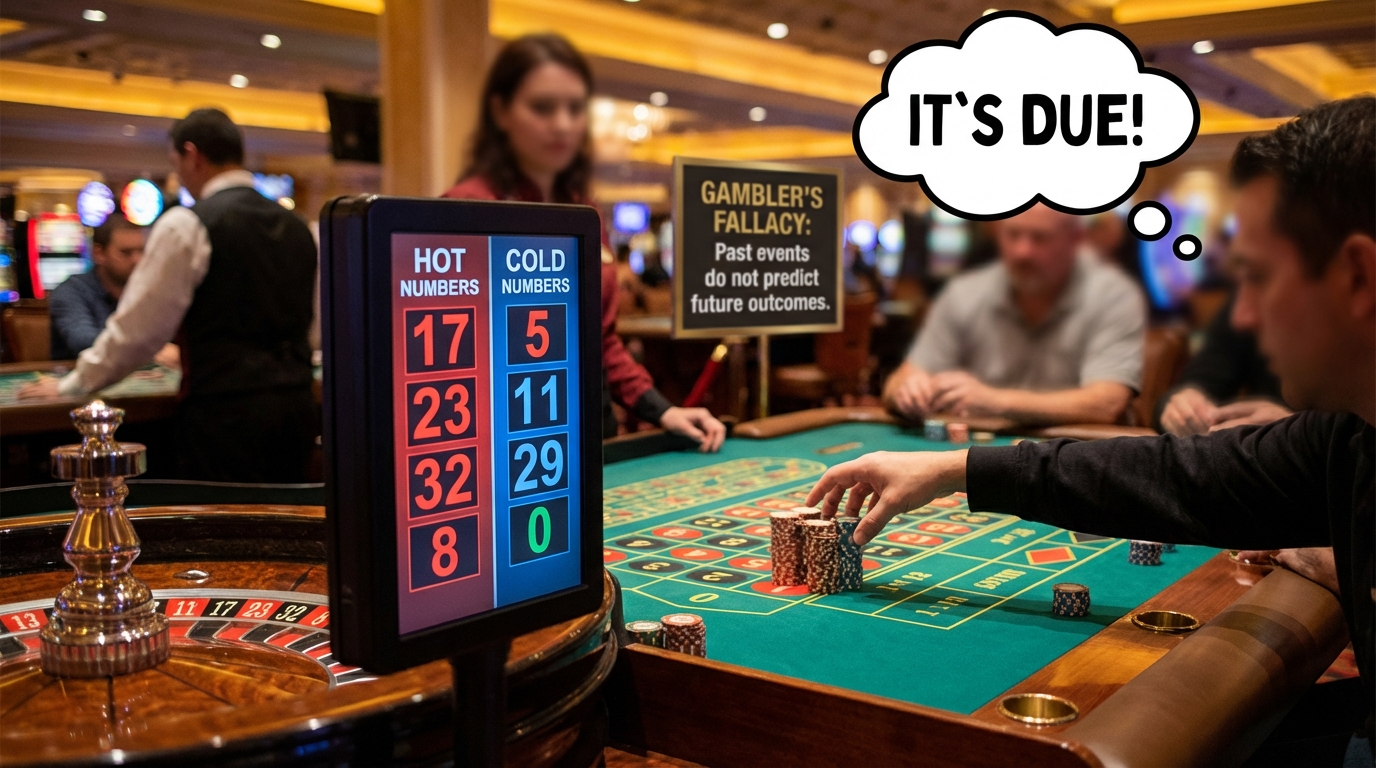
Hot numbers and cold numbers concepts represent pattern recognition attempts where players identify numbers appearing with apparently higher or lower frequency than probability theory predicts. Hot numbers supposedly maintain momentum and should receive continued backing, while cold numbers are “due” and merit wagering in anticipation of mean reversion. These trend betting approaches fundamentally misunderstand probability systems, as each roulette spin represents an independent event with unchanging odds regardless of previous outcomes. The spinning wheel and ivory ball have no memory of past results, making historical frequency data irrelevant to future spin probabilities in properly maintained random systems.
The gambler’s fallacy describes the mistaken belief that previous outcomes influence future probabilities in independent random events, manifesting in expectations that cold numbers must eventually appear or that winning streaks cannot continue indefinitely. Statistical reality confirms that perfectly balanced long-term distributions emerge only across enormous sample sizes—often millions of spins—while short-term variance regularly produces seemingly improbable sequences that represent normal probability fluctuations rather than exploitable patterns. A number failing to appear through 100 consecutive spins carries identical 1/37 probability on spin 101 as it did on spin 1, with the accumulated “cold” history providing zero predictive value regarding future outcomes.
Do Number Patterns Provide Betting Advantages?
Number patterns and historical outcome tracking provide no legitimate betting advantage in properly functioning roulette games employing genuine random outcome generation. Both mechanical wheels with regular maintenance and certified Random Number Generator systems in online roulette produce outcomes indistinguishable from true randomness within statistical confidence intervals. Pattern betting and trend analysis may offer psychological comfort or system justification for players preferring structured betting approaches over pure intuition, but these methodologies carry zero mathematical validity and cannot alter the fundamental expected value determined by house edge calculations.
The prevalence of hot numbers and cold numbers beliefs persists because short-term variance creates apparent patterns that human psychology instinctively identifies and extrapolates. Observing a number appearing three times within 20 spins feels meaningful despite representing a completely expected statistical occurrence—approximately 11% of numbers should appear three or more times in any random 20-spin sample. Casinos often display recent winning numbers precisely because these pattern recognition fallacies encourage extended play and larger wagers based on perceived trends. Effective roulette strategies acknowledge the independence of each spin, avoiding pattern-based betting decisions and instead focusing on bankroll management, bet selection aligned with personal preferences, and maintaining realistic expectations grounded in probability theory rather than illusory trend identification.
Best Roulette Strategies for Online Casino and Live Dealer Roulette

Online casino roulette environments present distinct strategic considerations compared to traditional land-based casino settings, particularly regarding Random Number Generator versus live dealer roulette formats. RNG-based games employ sophisticated algorithms producing cryptographically secure pseudo-random outcomes audited by independent testing agencies to ensure fairness. These digital implementations eliminate dealer signature possibilities, visual ballistics opportunities, and wheel tracking potential, reducing strategic options exclusively to bankroll management and betting pattern selection. However, RNG games often provide lower minimum betting limits and faster game speeds, enabling players to experience larger statistical samples within equivalent timeframes.
Live dealer roulette bridges online casino convenience with authentic gaming atmosphere, streaming professional croupiers operating physical wheels in real-time. These platforms preserve the social elements and visual authenticity of land-based experiences while maintaining digital betting interfaces, flexible table limits, and accessibility advantages characterizing online roulette. Strategic gambling considerations mirror traditional casino approaches, with identical house edge calculations, comparable betting options including call bets through racetrack layouts, and equivalent effectiveness for all betting systems and progression methods. The optimal platform choice depends on individual preferences regarding game speed, social interaction priority, minimum stake requirements, and aesthetic considerations rather than mathematical advantages, as expected value remains consistent across legitimate regulated formats.
Which Platform Offers Better Winning Opportunities?
Neither RNG roulette nor live dealer roulette provides superior winning opportunities from a mathematical perspective, as both formats maintain identical house edge percentages determined by the game variant (European, American, or French roulette) rather than delivery mechanism. Certified Random Number Generator systems undergo rigorous statistical testing to ensure outcome distributions match theoretical probabilities, while live dealer games employ professionally maintained equipment achieving equivalent randomness through physical mechanics. The casino advantage remains constant at 2.70% for European single-zero games or 5.26% for American double-zero variants regardless of whether outcomes derive from algorithms or physical wheel spins.
The practical advantages of online roulette platforms include accessibility, promotional bonuses potentially offsetting portions of house edge, and lower minimum bets enabling conservative bankroll strategies. Live dealer formats offer transparency through visible wheel spins that some players find psychologically reassuring compared to invisible RNG processes. Strategic players should prioritize selecting French roulette variants with La Partage or En prison rules when available, as these player-favorable provisions reduce house edge to 1.35% on even-money bets regardless of platform. Beyond variant selection, focus on disciplined bankroll management, realistic win goal establishment, strict loss limit adherence, and avoiding superstitious number pattern beliefs that characterize unsuccessful gambling approaches across all gaming formats and delivery platforms.
Andruchi System, Pivot System, and Alternative Mathematical Systems
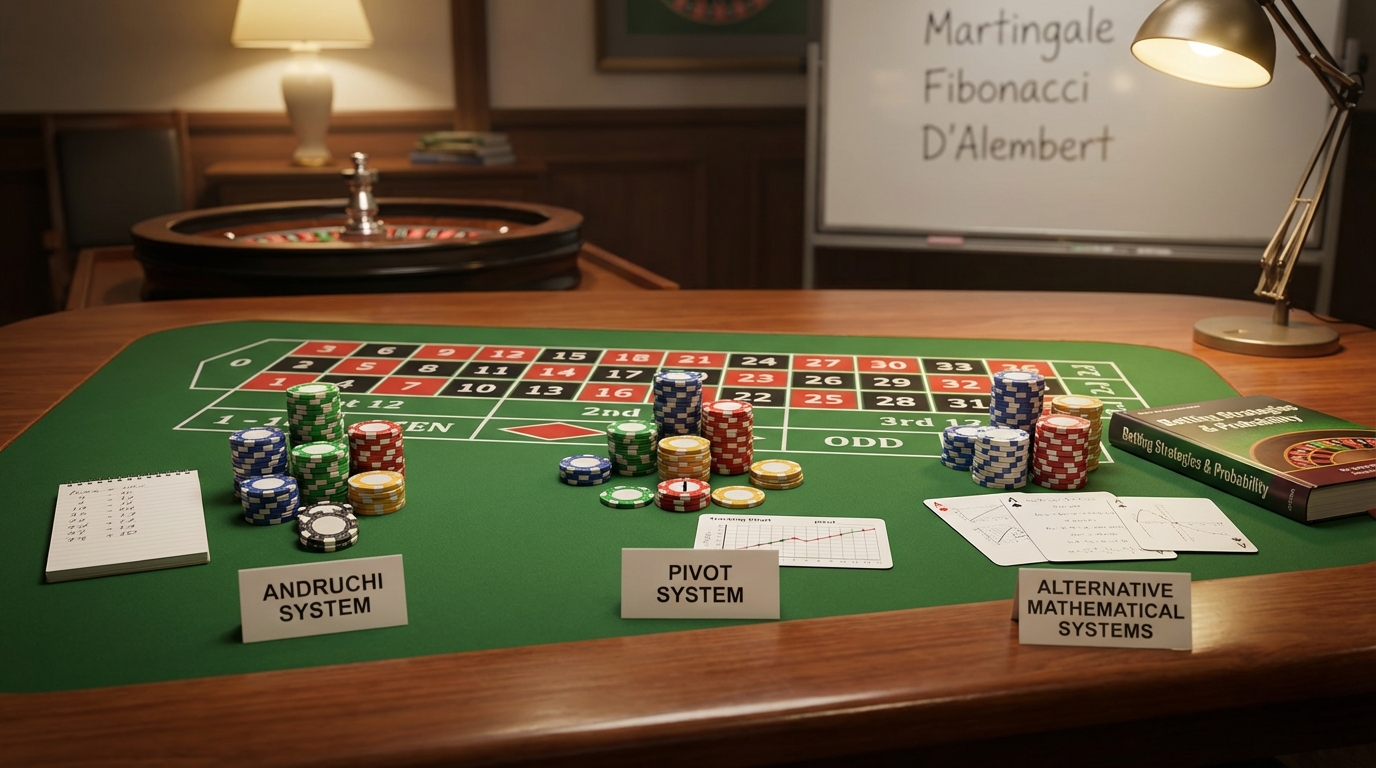
The Andruchi system employs a unique approach based on repeating number theory, requiring players to observe 30-37 spins while recording outcomes, then betting on numbers that appeared at least twice during the observation period. The system assumes these “pivot numbers” demonstrate momentum and will continue appearing at elevated frequencies, requiring players to wager on all qualifying numbers simultaneously until achieving predetermined profit targets or reaching maximum loss thresholds. This combination betting approach necessitates substantial gambling bankroll resources, as tracking sessions might identify 10-15 pivot numbers requiring simultaneous coverage through multiple straight up bet placements at each subsequent spin.
The Pivot system simplifies the repeating number concept by selecting a single number and wagering continuously until it appears, then selecting a new pivot number for the next sequence. Players typically allow 36 consecutive attempts before abandoning unsuccessful pivot numbers, based on calculations that any specific number should appear at least once within 36 spins approximately 63.7% of the time on European wheels. While this probability calculation is mathematically accurate, it commits the gambler’s fallacy by implying that unsuccessful pivot numbers during previous sequences carry altered probabilities in subsequent attempts. Each number maintains constant 1/37 (2.70%) probability on every spin regardless of recent appearance history or extended absence periods.
Do Alternative Systems Overcome the House Edge?
No mathematical systems, progressive betting methods, or alternative strategic wagering approaches can overcome the fundamental house edge embedded in roulette’s payout ratios relative to true winning odds. This mathematical certainty applies uniformly to classic systems like Martingale, Fibonacci, and D’Alembert as well as alternative methods including Andruchi, Pivot, and countless other betting systems promoted through gambling literature. The expected value calculation for every bet on a fair roulette wheel produces a negative result equal to the house edge percentage, meaning long-term losses are mathematically inevitable regardless of betting patterns, progression methods, or number selection strategies employed.
The persistent appeal of betting systems stems from psychological factors and short-term variance rather than mathematical validity. During limited gaming sessions, positive variance creates winning outcomes that players attribute to system effectiveness rather than statistical fluctuation, reinforcing confidence in flawed methodologies. Over extended timeframes approaching statistical significance, all systems converge toward expected loss levels determined by house edge calculations. Effective roulette strategies acknowledge this mathematical reality, focusing on bankroll protection, entertainment value maximization, and emotional control rather than pursuing illusory profit systems. The genuine value in studying various betting methods lies in identifying structured approaches that match individual risk preferences and gaming objectives while maintaining realistic expectations grounded in probability theory rather than wishful thinking.
Shotwell System and Number Group Betting Combinations
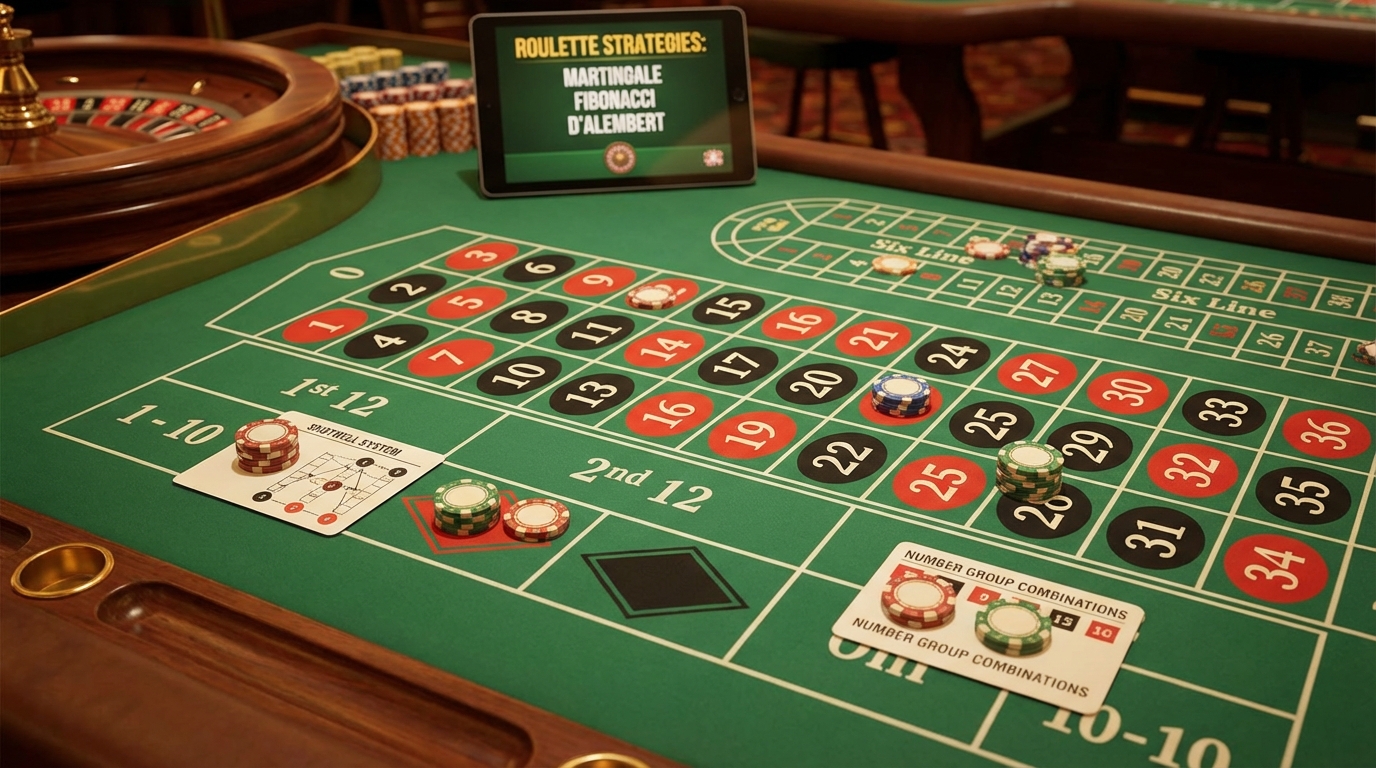
The Shotwell system introduces a hybrid betting approach combining straight up bet placements with two-number split bet coverage to create mathematically equivalent exposure across ten numbers. The strategy employs six specific wagers: four straight up bets on numbers 2, 7, 17, and 29, plus two split bets covering 11-14 and 20-23. This particular number selection distributes coverage evenly around the European roulette wheel while requiring only six chip placements rather than ten separate straight up bets. The system appeals to players seeking number groups exposure without the complexity of announced bets or call bets, though it provides no mathematical advantage over any other six-chip combination betting pattern.
The theoretical justification for the Shotwell system’s specific number selection remains mathematically unsupported, as no number group on properly maintained wheels carries elevated appearance probability compared to alternative combinations. The betting combination delivers returns of 35 units when straight up numbers appear (covering four of ten target numbers) or 17 units when split numbers hit (covering six of ten target numbers), with complete six-unit loss occurring when non-covered numbers appear in approximately 73% of spins. This risk-reward profile mirrors countless other combination bets configurations, with the expected value calculation producing identical negative results regardless of specific numbers chosen or the betting pattern employed to cover those selections.
How Should Players Select Number Combinations?
Number combination selection carries no mathematical significance in games employing legitimate Random Number Generator systems or properly maintained mechanical wheels producing truly random outcomes. Players should choose numbers based on personal preference, sentimental significance, or aesthetic patterns that enhance gaming enjoyment rather than pursuing illusory mathematical advantages through specific number groups. Birthdays, lucky numbers, or visually pleasing racetrack layout patterns provide equivalent expected value to sophisticated betting combinations or number patterns analyzed through statistical methods, as each number maintains identical probability on every independent spin.
The strategic priority involves selecting betting combinations that align with session bankroll capabilities and preferred risk-reward profiles rather than specific number identification. Players preferring frequent small wins should emphasize outside bets and coverage betting approaches, while those seeking occasional large payouts despite extended losing periods might prefer concentrated straight up bet placements. Dozen betting, column betting, and various inside bets combinations offer intermediate options balancing win frequency against payout magnitude. The key is establishing consistent bet distribution patterns that maintain disciplined stake management rather than reactive wagering based on recent outcomes, hot numbers beliefs, or pattern recognition fallacies that encourage escalating exposure beyond predetermined bankroll allocation limits and sound money management principles.
Comprehensive Comparison of Major Roulette Betting Systems
| Betting System | Progression Type | Risk Level | Bankroll Requirements | Best For |
|---|---|---|---|---|
| Martingale System | Negative Progression | High | Large | Short
Similar Posts
|